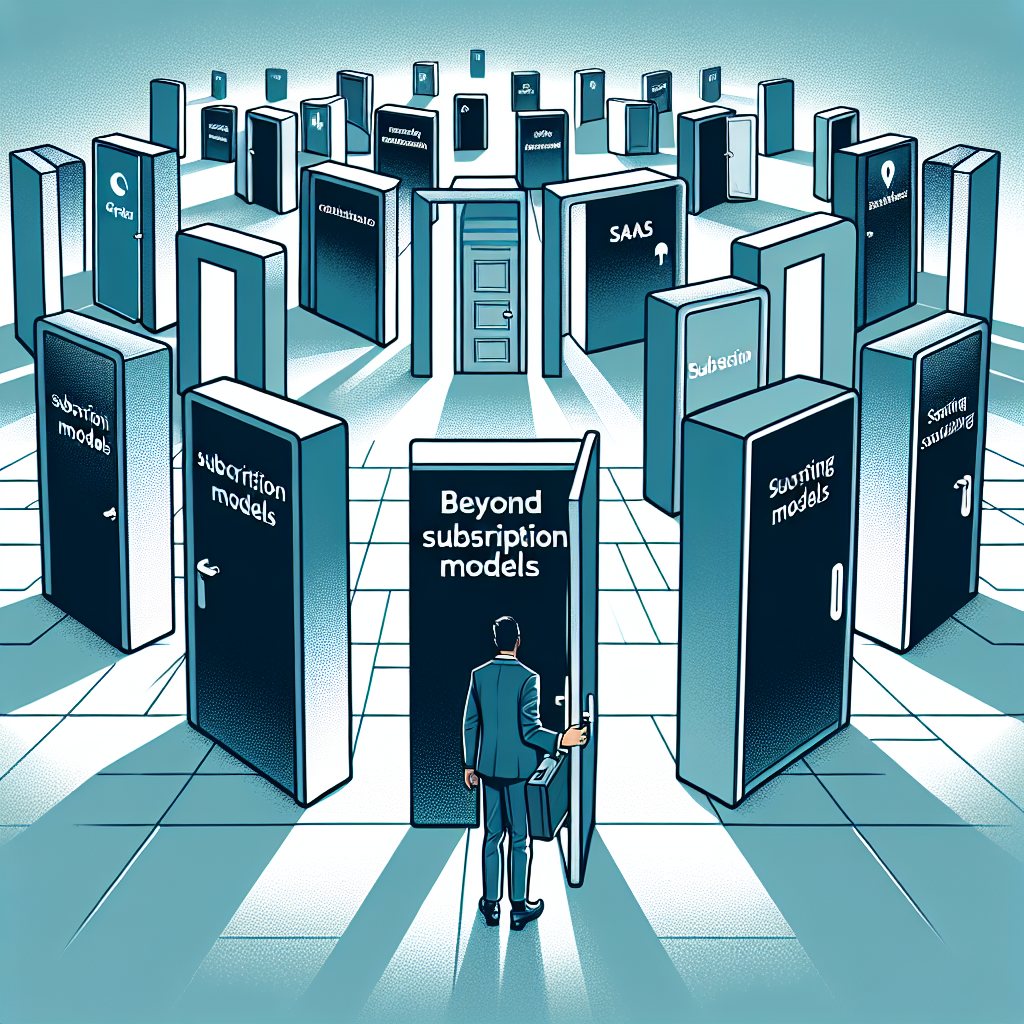
Beyond Subscription Models: Exploring the Next Generation of SaaS Monetization Strategies
The software as a service (SaaS) landscape has evolved dramatically over the past decade. With the increasing competition and ever-changing customer expectations, traditional subscription models are no longer sufficient to ensure sustained growth and profitability. As companies look to innovate and differentiate themselves, the next generation of SaaS monetization strategies is emerging. This blog post explores innovative approaches that go beyond conventional subscriptions, offering businesses fresh avenues for revenue generation.
Understanding the Shift in SaaS Monetization
Before we dive into specific strategies, it’s essential to understand why the shift is necessary. According to a recent report by Gartner, the global SaaS market is expected to reach $150 billion by 2025, indicating fierce competition among providers. As more companies adopt SaaS solutions, customer retention becomes crucial. Traditional subscription models often lead to stagnation in growth as they can limit customer engagement and fail to address diverse user needs.
1. Usage-Based Pricing: Pay for What You Use
One of the most compelling trends in SaaS monetization is the adoption of usage-based pricing models. This approach allows customers to pay based on their actual usage rather than a flat monthly fee. For example, Amazon Web Services (AWS) utilizes this model, charging clients based on the resources they consume. Such a model not only attracts a broader range of customers but also aligns pricing with the value received, enhancing customer satisfaction and loyalty.
Benefits of Usage-Based Pricing
Usage-based pricing offers several advantages:
- Flexibility: Customers can scale their usage up or down based on their needs, making it more appealing, especially for startups and smaller businesses.
- Lower Barrier to Entry: Potential customers can start using a service without committing to a hefty subscription fee, reducing the risk of trial and adoption.
- Increased Revenue Potential: As customers grow and expand their use of the service, revenue naturally increases without the need for constant upselling.
2. Freemium Models with Value-Added Features
The freemium model has been around for years, but its implementation is evolving. Companies like Dropbox and Slack have successfully utilized this strategy to build massive user bases. The key is to offer a basic version of the product for free while reserving advanced features for paying customers. However, the next generation of freemium models is focusing on enhancing the value of premium features.
Creating an Enticing Upgrade Path
To maximize the effectiveness of a freemium model, businesses must create an enticing upgrade path. This involves:
- Highlighting Benefits: Clearly demonstrating the benefits of premium features can motivate users to upgrade. For example, a project management tool might limit the number of projects in the free version but offer unlimited projects for premium users.
- In-App Promotions: Utilize in-app messaging to promote premium features at strategic points in the user journey, such as after achieving a critical milestone in the free version.
- Time-Limited Trials: Offering time-limited access to premium features can incentivize users to experience the full value of the product, encouraging them to convert to paying customers.
3. Marketplace Models: Creating an Ecosystem
Another innovative monetization strategy is the marketplace model, where SaaS platforms create an ecosystem for third-party developers to offer complementary products or services. This not only enhances the core product but also opens new revenue streams. For instance, Salesforce’s AppExchange allows third-party developers to build applications that integrate with Salesforce, generating additional revenue for both Salesforce and the developers.
Advantages of Marketplace Models
Marketplace models offer distinct advantages:
- Diverse Revenue Streams: By facilitating third-party solutions, SaaS companies can earn revenue through transaction fees, partnerships, or subscription models.
- Enhanced Customer Value: Customers benefit from a broader range of integrated services, increasing the overall value of the primary SaaS offering.
- Community Engagement: Marketplaces foster a community of developers and users, driving innovation and creating a loyal customer base.
4. Dynamic Pricing: Adapting to Market Demands
Dynamic pricing, commonly used in industries like travel and hospitality, is making its way into the SaaS world. This strategy involves adjusting prices based on demand, customer profiles, and market conditions. For example, a company may offer discounts during off-peak times or increase prices for high-demand features during peak usage periods.
Implementing Dynamic Pricing Strategies
To successfully implement dynamic pricing, businesses should consider:
- Data Analytics: Utilizing data analytics to track usage patterns and customer behavior can inform pricing adjustments in real time.
- Customer Segmentation: Different customer segments may react differently to price changes. Tailoring pricing strategies to specific user profiles can optimize revenue.
- Transparent Communication: Clearly communicating the reasons for price changes helps maintain customer trust and satisfaction.
Conclusion: Embracing Innovation in SaaS Monetization
The SaaS industry is at a crossroads, necessitating innovative monetization strategies that go beyond traditional subscription models. By embracing usage-based pricing, enhancing freemium models, creating marketplace ecosystems, and leveraging dynamic pricing, companies can foster growth, improve customer satisfaction, and ultimately drive profitability.
As you consider these strategies, remember that the key to success lies in understanding your customer’s needs and continuously adapting to the market landscape. Explore these innovative approaches to find the right fit for your business and stay ahead in the competitive SaaS arena.