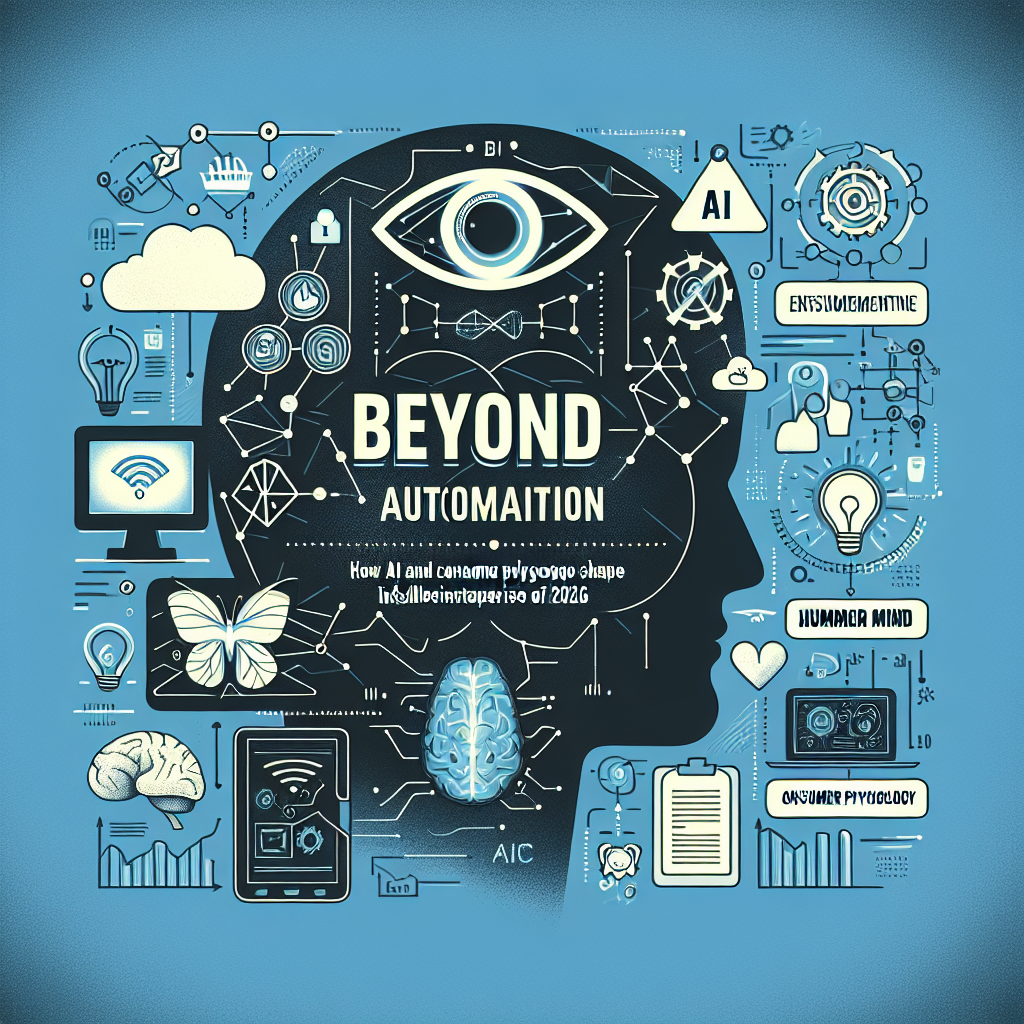
Beyond Algorithms: How AI and Automation Will Reshape Consumer Engagement Strategies by 2026
In an era where technology evolves at breakneck speed, businesses are increasingly turning to artificial intelligence (AI) and automation to redefine consumer engagement strategies. By 2026, the landscape of customer interaction will be dramatically transformed, with AI algorithms not just crunching numbers, but also shaping personalized experiences, predicting consumer behavior, and enhancing real-time communication. As we delve into this topic, we’ll explore how businesses can leverage these advancements to foster deeper connections with their consumers and drive sustainable growth.
The Rise of AI in Consumer Engagement
AI is no longer a futuristic concept; it’s a reality that is reshaping the way brands interact with their audience. According to a report by McKinsey, businesses that adopt AI-driven strategies can increase their operational efficiency by up to 40%. This remarkable potential is prompting companies to explore AI’s capabilities beyond traditional tasks. From chatbots that provide instant customer service to recommendation engines that personalize shopping experiences, AI is redefining engagement at every touchpoint.
Personalization at Scale
One of the most significant shifts brought about by AI is the ability to offer hyper-personalized experiences. By 2026, brands will be able to harness vast amounts of consumer data, analyzing behavior patterns and preferences to tailor their offerings. For instance, consider how streaming services like Netflix use AI algorithms to recommend content based on viewing history. Similarly, e-commerce platforms will leverage AI to create personalized shopping journeys, suggesting products that align with individual tastes, thereby increasing conversion rates. In fact, a study by Epsilon revealed that 80% of consumers are more likely to make a purchase when brands offer personalized experiences.
Automation: Enhancing Efficiency and Engagement
Automation is another key player in the evolving landscape of consumer engagement. By 2026, businesses will increasingly rely on automated systems to streamline communication and enhance customer service. With the rise of tools like AI-driven email marketing platforms and CRM systems, brands can automate responses to common queries, manage customer interactions seamlessly, and analyze engagement metrics with minimal human intervention.
Real-Time Interactions
Real-time engagement is becoming a crucial component of customer satisfaction. Technologies such as chatbots and virtual assistants are already being deployed by companies to provide instant support, often 24/7. By 2026, these automated interactions will become even more sophisticated, capable of understanding context and providing nuanced responses. For example, imagine a customer reaching out for product support via chat; an AI bot could analyze their previous purchases and browsing history to provide tailored assistance, creating a more engaging and effective interaction.
Predictive Analytics: Anticipating Consumer Needs
Predictive analytics is another frontier that AI will conquer, enabling brands to anticipate consumer needs before they even arise. By analyzing historical data and trends, businesses can forecast purchasing behavior, allowing them to optimize inventory, tailor marketing campaigns, and enhance overall customer experience. According to a report from Forrester, companies utilizing predictive analytics can see a 20% increase in sales. As we move toward 2026, the integration of predictive analytics into consumer engagement strategies will become not just advantageous, but essential.
Data-Driven Decision Making
In the world of consumer engagement, data is king. As AI technologies improve, businesses will have access to more granular data insights, empowering them to make informed decisions. This shift towards data-driven strategies will not only enhance customer engagement but also drive innovation. For instance, companies can utilize AI to run A/B tests on marketing campaigns, analyzing which strategies resonate best with their audience, and adjusting in real-time for maximum impact. In this way, AI will enable brands to be more agile and responsive to consumer needs.
Building Trust Through Transparency
As AI and automation become more integrated into consumer engagement, there is a growing need for brands to prioritize transparency. Consumers are becoming increasingly aware of how their data is being used, and trust will be a critical factor in maintaining strong relationships. By 2026, brands that openly communicate their data practices and prioritize consumer privacy will stand out from the competition. For instance, companies like Apple are already leading the way by emphasizing user privacy in their marketing strategies, showcasing how ethical practices can enhance brand loyalty.
Ethical AI Practices
Implementing ethical AI practices will be paramount in fostering trust. Brands must ensure that their AI systems are not only efficient but also equitable and transparent. This means regularly auditing algorithms to prevent biases and ensuring that consumers have control over their data. As consumers become more informed, brands that demonstrate accountability and ethical practices will not only enhance engagement but also build long-lasting loyalty.
Conclusion: Embracing the Future of Engagement
As we approach 2026, the role of AI and automation in consumer engagement will be transformative. Businesses that embrace these technologies will find themselves at the forefront of innovation, equipped to create personalized, efficient, and trustworthy interactions with their consumers. To thrive in this evolving landscape, brands should invest in AI-driven personalization, leverage automation for efficiency, utilize predictive analytics for foresight, and prioritize ethical practices that build trust.
In a world increasingly defined by technology, the future of consumer engagement lies not just in algorithms, but in the human touch that these technologies can enhance. By taking proactive steps today, businesses can pave the way for a more engaging and successful tomorrow.