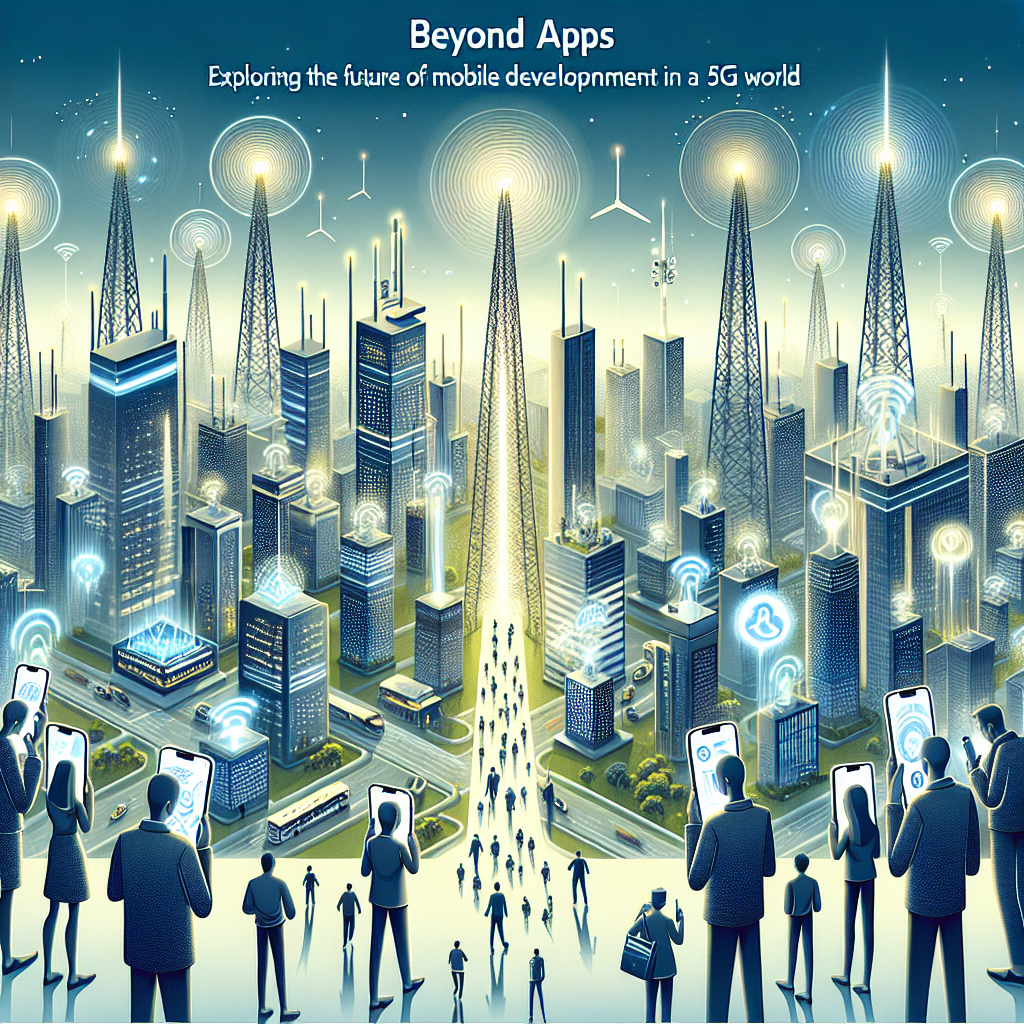
Beyond Apps: Exploring the Future of Mobile Development in a 5G World
The advent of 5G technology is not merely a step up from 4G; it signifies a seismic shift in how we think about mobile development. With faster speeds, reduced latency, and enhanced connectivity, 5G opens up an array of possibilities that go beyond traditional app development. As we stand on the brink of this new era, it’s essential to explore the implications of 5G for mobile development and how developers can harness its potential to create innovative solutions that reshape industries and everyday life.
The Promise of 5G: More Than Just Speed
5G technology is often celebrated for its blistering speed—up to 100 times faster than 4G—but its true value lies in its capacity to connect a massive number of devices simultaneously. According to the Global System for Mobile Communications (GSMA), 5G networks are expected to support over 1 million devices per square kilometer. This capability paves the way for transformative applications, especially in the realm of the Internet of Things (IoT).
Connecting the Unconnected
In a 5G world, the potential for IoT is vast. Smart cities, autonomous vehicles, and connected healthcare devices are just the tip of the iceberg. For instance, cities can utilize 5G to optimize traffic flow through smart traffic lights that communicate with vehicles, reducing congestion and emissions. In healthcare, remote surgeries can become a reality, where surgeons operate on patients thousands of miles away with the aid of high-speed, low-latency connections.
The Rise of Edge Computing
As mobile development evolves, the concept of edge computing is gaining traction. With 5G, data can be processed closer to the source rather than being sent to a centralized server. This reduces latency, enhances speed, and improves user experiences. For mobile developers, integrating edge computing into their applications can lead to significant advancements, particularly in sectors like gaming and augmented reality (AR).
AR and VR: A New Dimension of Experience
Imagine a world where your mobile device can overlay digital information onto the real world in real-time with no lag. With 5G and edge computing, augmented reality applications can become more immersive and interactive. For example, retailers can offer virtual try-ons, allowing customers to see how clothes fit without ever stepping into a store. This not only enhances the shopping experience but also drives sales and reduces return rates.
Transforming Mobile Development Practices
With the introduction of 5G, mobile development practices will need to adapt. Developers must consider new paradigms, such as designing for ultra-reliable low-latency communication (URLLC) and massive machine-type communication (mMTC). This shift will require a deep understanding of the unique capabilities and limitations of 5G technology.
Emphasizing Security in a 5G World
As connectivity increases, so do security concerns. With millions of devices interconnected, the attack surface for cyber threats expands significantly. Developers will need to prioritize security measures in their applications from the ground up. Implementing end-to-end encryption, regular security audits, and keeping up with the latest security protocols are essential steps in safeguarding user data.
The Future of Mobile Development: Skills and Tools
To thrive in a 5G world, mobile developers must equip themselves with new skills and tools. Familiarity with 5G network functionalities, edge computing principles, and IoT integration will be crucial. Additionally, programming languages and frameworks that facilitate rapid development and deployment—such as Kotlin for Android and Swift for iOS—will continue to be in high demand.
Exploring New Frameworks
As the landscape of mobile development shifts, new frameworks designed specifically for 5G and IoT will emerge. Developers should keep an eye on platforms like Flutter and React Native, which allow for cross-platform development while maintaining high performance. These tools can streamline the development process, making it easier to create applications that leverage the unique benefits of 5G.
Conclusion: Embrace the Future
The future of mobile development in a 5G world is filled with opportunities and challenges. As we move forward, it’s essential for developers to embrace the potential of 5G and adapt to new technologies and practices. By focusing on building secure, innovative applications that leverage the speed and connectivity of 5G, developers can not only stay competitive but also contribute to groundbreaking advancements across various industries.
Actionable takeaways include: stay informed about 5G advancements, invest in learning edge computing and IoT technologies, prioritize security in your applications, and explore new frameworks that can enhance your development process. The future is here, and it’s time to go beyond apps and explore the endless possibilities that 5G offers.