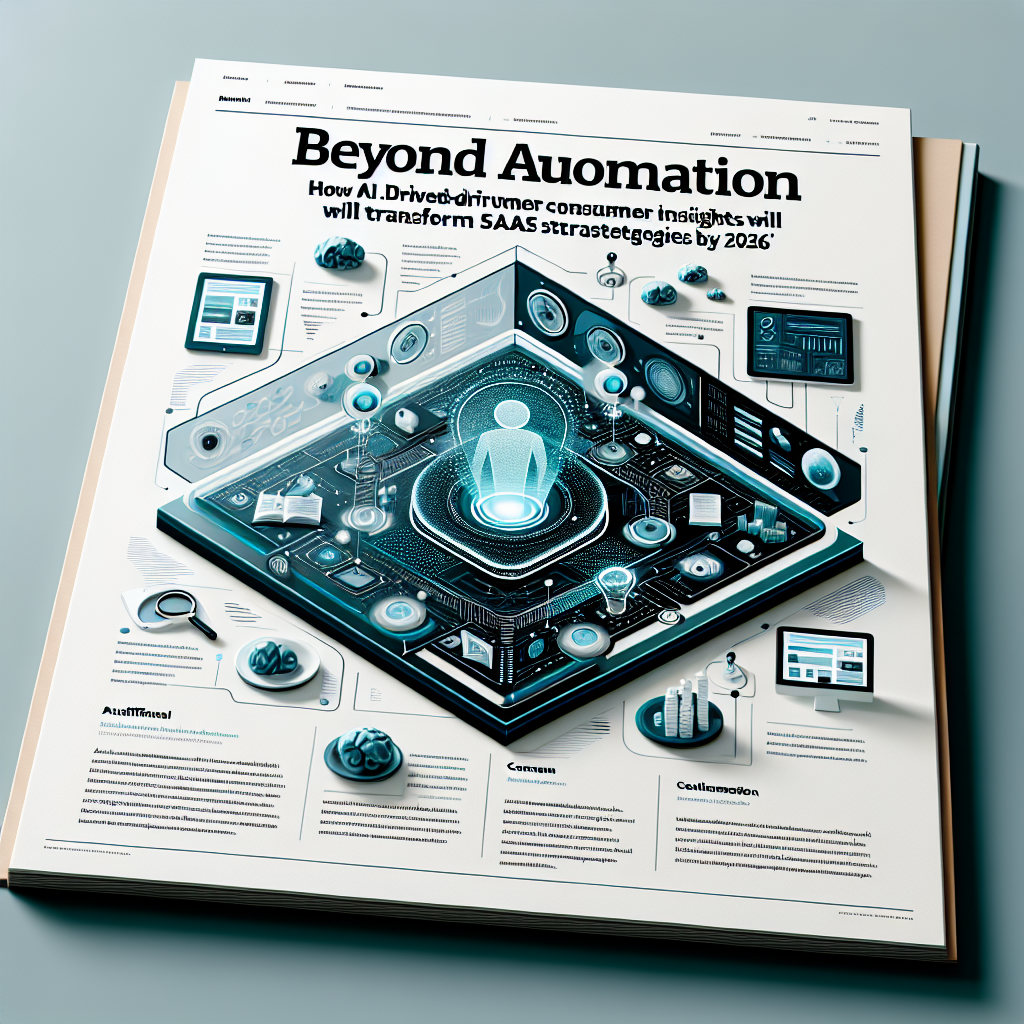
Beyond Automation: How AI-Driven Consumer Insights Will Transform SaaS Strategies by 2026
As we venture deeper into the digital age, the SaaS (Software as a Service) marketplace is experiencing a seismic shift. While automation has long been hailed as the keystone of operational efficiency, the next wave of transformation is being fueled by AI-driven consumer insights. By the year 2026, these insights will not only enhance how SaaS companies understand their customers but also redefine their strategies, product offerings, and ultimately, their bottom line. In this post, we will explore how AI will revolutionize SaaS strategies and what this means for businesses moving forward.
The Evolution of Consumer Insights
Historically, consumer insights were derived from basic data analytics and market research. Companies relied on surveys, focus groups, and sales data to gauge customer preferences. However, this approach often led to outdated or incomplete pictures of consumer behavior. According to a report by Gartner, 80% of companies believe they deliver "superior" customer experiences, but only 8% of customers agree. This gap highlights the need for more sophisticated insights.
With the advent of artificial intelligence, businesses can now harness vast amounts of data in real-time. AI algorithms can analyze consumer behavior patterns, preferences, and even sentiments expressed on social media. For example, platforms like Salesforce Einstein and HubSpot have begun integrating AI-driven insights into their offerings, allowing businesses to create more personalized customer experiences. This shift from traditional methods to AI-driven analytics represents a pivotal moment in how SaaS companies engage with their consumers.
The Power of Predictive Analytics
One of the most significant advantages of AI-driven consumer insights is the ability to leverage predictive analytics. By utilizing machine learning models, SaaS companies can forecast customer needs and behaviors with remarkable accuracy. According to McKinsey, businesses that employ AI-driven predictive analytics can increase their marketing ROI by 15 to 20%.
Enhancing Customer Retention
Retention strategies are crucial for SaaS companies, given the subscription-based nature of their business model. AI can play a vital role here by identifying at-risk customers. For instance, by analyzing user engagement data, an AI model can predict when a customer is likely to churn and trigger proactive outreach from the sales team. This targeted approach not only saves time but also improves customer satisfaction and loyalty.
Personalization at Scale
Another impact of predictive analytics is the ability to offer personalized experiences at scale. AI can tailor recommendations based on individual customer behavior, making product suggestions more relevant and timely. For instance, Netflix utilizes AI algorithms to analyze viewing habits and provide personalized recommendations, which has been a significant driver of user engagement and retention. SaaS companies can adopt similar models to create tailored experiences that resonate with their target audience.
Driving Product Development Through Consumer Insights
AI-driven consumer insights are not only beneficial for marketing and retention; they also play a crucial role in product development. By analyzing user feedback, feature requests, and usage patterns, SaaS companies can make data-driven decisions about product enhancements and new features.
Agility in Development
With AI analytics, companies can quickly identify which features are most valuable to their customers. This agility allows for rapid iteration and innovation. For example, a company like Slack continuously analyzes user interactions to understand which functionalities are most used, enabling them to prioritize development resources effectively. This data-driven approach ensures that product development aligns closely with consumer needs, ultimately enhancing user satisfaction.
Ethical Considerations and Data Privacy
As SaaS companies increasingly rely on AI-driven consumer insights, ethical considerations and data privacy will become paramount. Consumers are more aware of how their data is used, and businesses must prioritize transparency and security. According to a study by PwC, 79% of consumers are concerned about how companies use their data, indicating a need for SaaS providers to be vigilant in their data practices.
Companies should invest in robust data governance frameworks and ensure compliance with regulations like GDPR and CCPA. By prioritizing ethical AI practices, SaaS companies can build trust with their consumers, which is essential for long-term success.
Conclusion: Embracing the Future
As we look toward 2026, it is clear that AI-driven consumer insights will be a game changer for SaaS strategies. By leveraging predictive analytics, enhancing customer retention, personalizing experiences, and driving informed product development, SaaS companies can not only meet but exceed customer expectations. However, with great power comes great responsibility; companies must remain committed to ethical data practices to retain consumer trust.
To thrive in this evolving landscape, SaaS businesses should consider the following actionable takeaways:
- Invest in AI technologies that provide real-time consumer insights.
- Utilize predictive analytics to enhance customer retention and personalize experiences.
- Implement data governance practices to ensure compliance and build consumer trust.
- Continuously iterate on product development based on consumer feedback and usage data.
By embracing these strategies, SaaS companies can position themselves for success in an increasingly competitive market, turning insights into action and ultimately, driving growth.