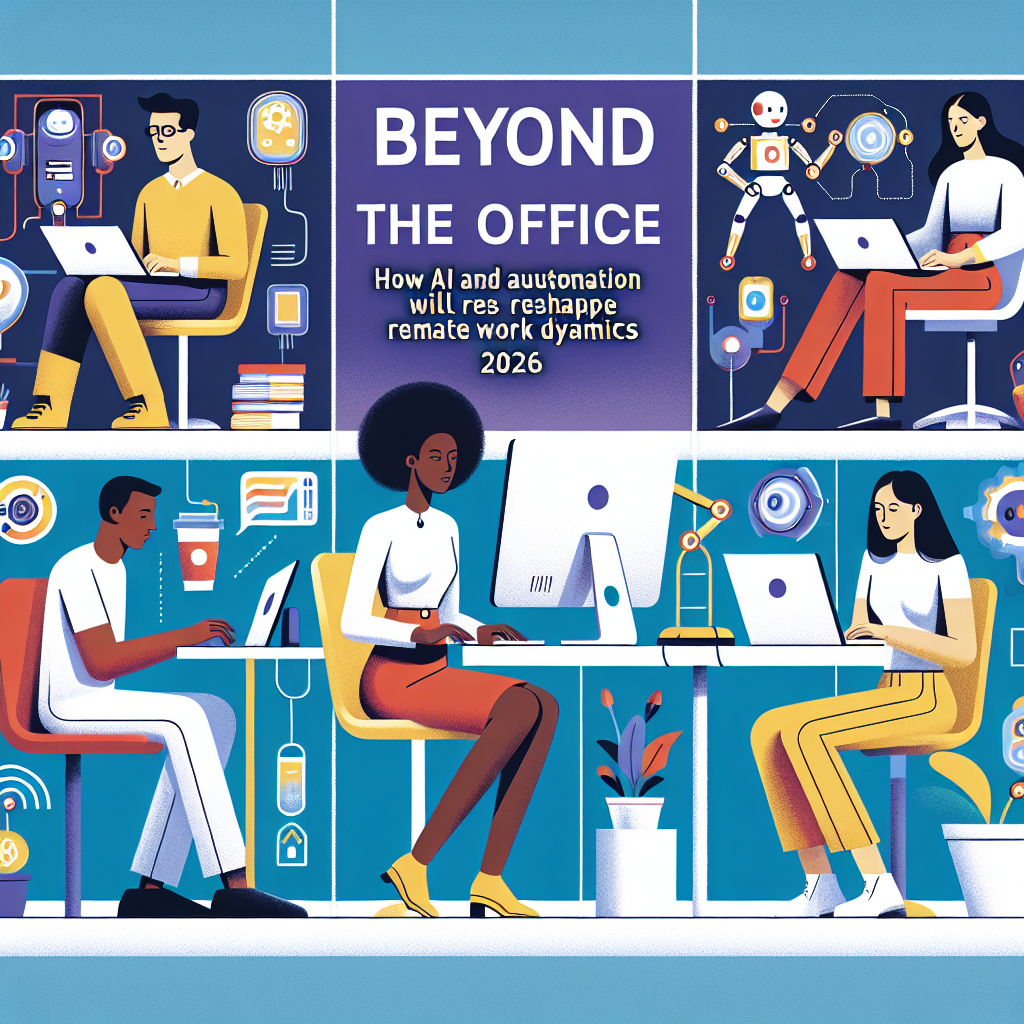
Beyond the Office: How AI and Automation Will Reshape Remote Work Dynamics by 2026
The landscape of work has undergone a seismic shift in recent years, driven largely by technological advancements and the global pandemic. Remote work has transitioned from a temporary solution to a permanent fixture in many organizations. As we look ahead to 2026, the integration of artificial intelligence (AI) and automation will not only enhance productivity but will also redefine how we collaborate, communicate, and manage our work-life balance. In this article, we will explore the transformative effects of AI and automation on remote work dynamics and what that means for employees and employers alike.
The Rise of AI in Remote Work
AI has already begun to infiltrate the remote work environment, automating repetitive tasks and facilitating smarter decision-making. According to a report by McKinsey, AI could potentially increase productivity by up to 40% in some sectors. This increase is not merely about speed; it's also about enhancing the accuracy of decision-making processes. For instance, AI-driven analytics tools can sift through enormous datasets to provide insights that help teams make informed decisions without the burden of manual analysis.
Enhanced Collaboration Tools
One of the most significant advancements in AI for remote work is the development of sophisticated collaboration tools. Platforms like Slack and Microsoft Teams are integrating AI features that can summarize conversations, suggest relevant documents, or even propose meeting times based on participants’ availability. These tools do not just make remote work more efficient; they also help maintain a sense of community among team members who may be physically distant.
Automation: Streamlining Workflows
Automation is another key player in the remote work revolution. By automating mundane tasks, employees can redirect their focus toward strategic initiatives that require human creativity and critical thinking. According to a study by PwC, 77% of workers believe that AI and automation will free them from repetitive tasks, allowing them to engage in more meaningful work. This not only boosts job satisfaction but also enhances overall productivity.
Task Automation Examples
Consider the mundane yet essential tasks like scheduling meetings or managing email correspondence. Tools like Calendly use automation to eliminate the back-and-forth of scheduling, while AI-powered email assistants can prioritize messages and even provide suggested responses. By 2026, we can expect these tools to become even more advanced, allowing employees to spend less time on administrative duties and more on collaborative projects that drive innovation.
The Human Element: Balancing AI and Automation
While the benefits of AI and automation are evident, the human element of remote work should not be overlooked. As AI takes over more tasks, it's crucial for organizations to foster a culture that values human creativity and emotional intelligence. According to a report by Gartner, 58% of employees believe that their roles will change significantly due to AI, but 69% also feel that emotional intelligence will remain a critical skill in the workplace.
Training and Development
As we transition towards a more automated work environment, companies must invest in training and development programs that equip employees with the necessary skills to thrive. This includes not only technical training but also soft skills like communication, adaptability, and problem-solving. By 2026, organizations that prioritize continuous learning will be better positioned to harness the full potential of AI and automation.
The Future of Employee Well-Being
As remote work becomes more entrenched, employee well-being will be a focal point for organizations. AI and automation can play a role in this area as well. For instance, AI-driven wellness apps can monitor employee stress levels and provide personalized recommendations for managing work-life balance. Moreover, companies can leverage data analytics to identify trends in employee engagement and morale, allowing them to proactively address potential issues before they escalate.
Creating a Supportive Remote Environment
To create a supportive remote work environment, organizations should prioritize mental health resources and encourage regular check-ins between team members and supervisors. By fostering an open dialogue about well-being, companies can create a culture of support that enhances employee satisfaction and retention.
Conclusion: Preparing for a New Era of Work
As we look toward 2026, the integration of AI and automation will undoubtedly reshape remote work dynamics. Organizations that embrace these changes will benefit from increased productivity, enhanced collaboration, and improved employee well-being. However, it is essential to remember that technology is a tool, not a replacement for the human touch. By balancing automation with emotional intelligence and investing in employee development, companies can create a thriving remote work culture that stands the test of time.
In conclusion, as we navigate this new era of work, here are some actionable takeaways:
- Invest in AI-powered tools that enhance collaboration and productivity.
- Automate routine tasks to allow employees to focus on value-added activities.
- Prioritize continuous training and development to keep your workforce adaptable.
- Foster a culture of well-being through open communication and mental health resources.
- Stay informed about emerging technologies and their potential impact on your industry.