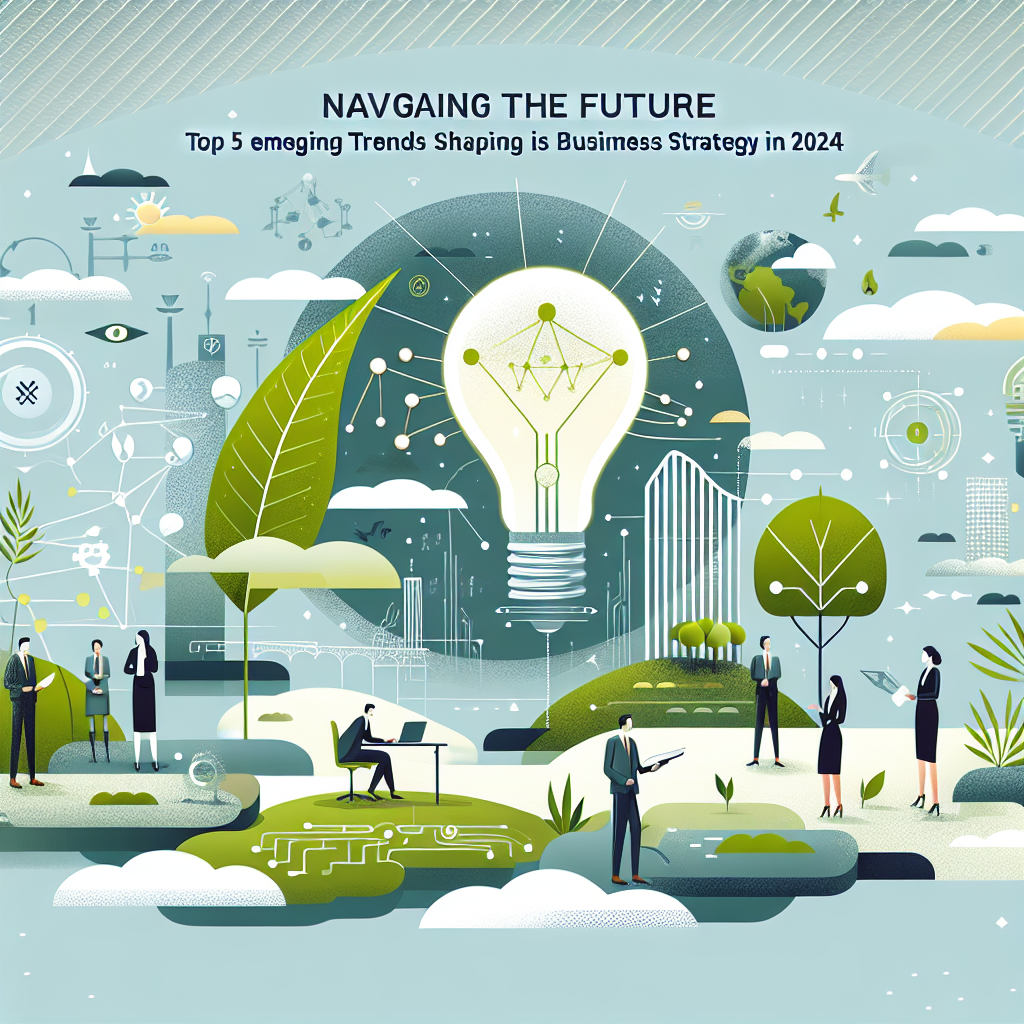
Navigating the Future: 5 Emerging Business Strategies to Embrace in 2024
As we step into 2024, businesses across the globe are bracing for a year filled with both challenges and opportunities. The rapid pace of technological advancement, shifting consumer preferences, and evolving market dynamics are reshaping the business landscape. To thrive in this environment, companies must adopt innovative strategies that not only address contemporary issues but also position them for future success. This blog post will explore five emerging business strategies that are set to redefine success in 2024 and beyond.
1. Embracing Sustainability as a Core Strategy
In recent years, sustainability has transitioned from a nice-to-have to a critical business imperative. According to a 2022 report by McKinsey, over 70% of consumers are willing to pay more for sustainable products. As environmental concerns grow, integrating sustainability into your business model is no longer optional; it’s essential.
Practical Steps to Implement Sustainability
Businesses can start by assessing their supply chains and reducing carbon footprints. This could involve sourcing materials locally, investing in renewable energy, or adopting circular economy principles. For instance, companies like Unilever have successfully integrated sustainability into their brands, seeing increased customer loyalty and brand value as a result.
2. Leveraging Artificial Intelligence for Enhanced Decision-Making
Artificial Intelligence (AI) continues to revolutionize how businesses operate. By 2024, AI is expected to contribute up to $15.7 trillion to the global economy, according to PwC. From data analysis to customer service, AI tools can provide insights that lead to better business decisions and operational efficiencies.
Integrating AI into Business Processes
For example, businesses can utilize AI-driven analytics to predict market trends and consumer behavior, allowing them to make informed decisions quickly. Companies like Amazon use AI to personalize customer experiences, leading to increased sales and customer satisfaction. Implementing AI solutions can seem daunting, but starting with small projects and scaling gradually can yield significant benefits.
3. Fostering a Culture of Continuous Learning
As the skills required in the workforce evolve, fostering a culture of continuous learning within organizations will be crucial. A study by LinkedIn found that companies with strong learning cultures are 92% more likely to innovate and adapt to change. This trend is expected to intensify in 2024 as industries continue to face rapid transformations.
Creating Learning Opportunities
Businesses should invest in employee training and development programs that promote upskilling and reskilling. This could involve partnerships with educational institutions or online platforms like Coursera and Udemy. Additionally, encouraging a culture where employees can share knowledge and learn from one another can lead to improved morale and productivity.
4. Utilizing Data-Driven Marketing Strategies
Data-driven marketing is becoming increasingly crucial in a landscape where consumer preferences are constantly shifting. In 2024, businesses that leverage data analytics to understand their customers better will have a competitive edge. According to a report by Deloitte, businesses using data-driven marketing strategies are six times more likely to be profitable year-over-year.
Implementing Effective Data-Driven Techniques
Companies can use customer data to create personalized marketing campaigns that resonate more deeply with their target audiences. For example, Netflix utilizes user data to recommend shows and movies, significantly enhancing viewer engagement. Businesses should also invest in tools and technologies that facilitate data collection and analysis, ensuring they remain agile and responsive to market changes.
5. Prioritizing Customer Experience through Omnichannel Strategies
In an increasingly digital world, providing a seamless customer experience across multiple channels is paramount. By 2024, brands that prioritize omnichannel strategies will stand out as consumer expectations continue to rise. A study by Shopify found that businesses with omnichannel strategies can expect a 10% increase in customer retention rates.
Building an Omnichannel Presence
To effectively implement an omnichannel approach, businesses must ensure consistency across all touchpoints, whether online or offline. This could involve integrating CRM systems, utilizing social media for customer engagement, and providing personalized support. Brands like Starbucks have successfully implemented omnichannel strategies by allowing customers to order via mobile apps, in-store, or online, creating a cohesive experience that drives loyalty.
Conclusion: Actionable Takeaways for 2024
As we look ahead to 2024, the business landscape will demand adaptability and innovation. By embracing sustainability, leveraging AI, fostering continuous learning, utilizing data-driven marketing, and prioritizing customer experience, businesses can position themselves for success. Here are some actionable takeaways:
- Evaluate and integrate sustainable practices into your business model.
- Explore AI tools and analytics to enhance decision-making.
- Invest in continuous learning opportunities for your employees.
- Utilize data to inform marketing strategies and personalize customer engagement.
- Develop a seamless omnichannel experience for your customers.
By adopting these emerging strategies, companies can not only navigate the challenges of 2024 but also seize the opportunities that lie ahead, ensuring long-term success in an ever-evolving business landscape.